Fereshteh Forghani

Fereshteh Forghani

M.Sc. Student

York University

About me

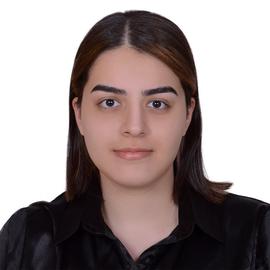
My name is Fereshteh Forghani. I am a first-year Computer Science Master’s student at York University under the supervision of Dr. Marcus Brubaker. I am interested in computer vision and deep learning. Specifically, I am interested in methods that can use unlabeled data in the learning process. This includes generative models and self-supervised learning methods. Previously, I did my Bachelor’s at Sharif University of Technology, majoring in Computer Engineering.

My Email is “forghani” at “yorku.ca”.

Download my CV.

Interests
  • Machine Learning
  • Deep Learning
  • Computer Vision
  • Autonomous Driving
  • Artificial Intelligence
Education
  • MSc in Computer Science, 2022-present

    York University

  • BSc in Computer Engineering (GPA = 18.53/20), 2017-2022

    Sharif University of Technology

  • Diploma in Mathematics and Physics (GPA = 19.90/20), 2013-2017

    National Organization for Development of Exceptional Talents (NODET),Farzanegan High School

News

Accepted Offer of Admission to York University Computer Science Master’s Program.
Accepted VISTA Masters scholarship at York University.
Accepted a remote internship offer at Visual Intelligence for Transportation (VITA) Lab under supervision of Prof. Alexandre Alahi.
I started working at the Medical Imaging research group under the supervision of Prof. Mohammad Hossein Rohban.
I got accepted to Sharif University of Technology for a B.Sc. in Computer Engineering.

Research Experience


Currently reading papers about diffusion models, their foundations and theis applications.


This project aim to find natural adversarial examples to test the reliability of human trajectory predictors using density estimation techniques. First, we conducted a litrature review on density estimation techniques, such as Masked autoregressive flow, RealNVP and Masked autoencoder for distribution estimation. We proceed by using Masked autoregressive flow(MAF) to find natural adversarial examples to test the reliability of human trajectory predictors. Subsequently, we adversarially trained LSTM based predictors and reduced the collision rate up to 35% in the case of adversarial attack on test data.


In medical analysis, supervised and labeled data is used in many cases. However, labeling medical images is extremely difficult, expensive, and time-consuming. In this project, we propose using genralized self-supervised frameworks to extract features from unlabeled images. We pre-trained a U-net encoder with SimCLR, MoCo, and SimSiam. We managed to improved IoU score after fine-tuning with annotated ones up to 6%.


Sinaweb company
Intern
Jul 2020 – Oct 2021 Tehran, Iran
I worked on ML based forgery recognition through handwriting style recognition. The aim of this project was to develop a plagiarism detection method which uses variations in writing style to identify potentially plagiarized passages. We extracted lexical, structural, and syntax features, proposed a regression model to fuse features and predict writing style, and finally, implemented an outlier detection model to find possible plagiarised segments.


Image Processing Lab (IPL), Sharif University of technology
Research assistant
May 2021 – Sep 2021 Tehran, Iran
I’m working as a scientific collaborator in the Image Processing Lab (IPL) at Sharif University under the supervision of Prof. Shohreh Kasaei. I am investigating Adversarial attacks against Deep Neural Networks, specifically focusing on 3D pointCloud networks (PointNet and PointNet++).

Teaching


Teaching assistant
Feb 2019 – Jun 2021 Tehran, Iran
  • Machine Learning (graduate course)(CE717) | Dr. A. Hosseini | Spring 2021 & Fall 2021
  • Artificial Intelligence (CE417)| Dr. MH. Rohban | Spring 2021

Skills

Vision/ML Libraries

TensorFlow, PyTorch, Numpy, Pandas, Scikit-Learn, NLTK

Programming

C/C++, Python, Java

Data Manipulation

Pandas, SQL

Web and Mobile app Development

Django, HTML, CSS, JS, Android, Swift